

Gynecomastia Pull-Through Procedure with Dr. Miguel Delgado

Many men deal with persistent chest fullness that no amount of diet or exercise seems to fix. When firm glandular tissue, not fat alone, is the cause, the gynecomastia pull-through procedure offers targeted surgical treatment through a tiny incision. Here is what you need to know about candidacy, how the surgery works, expected results, and why Dr. Delgado is one of the most sought-after specialists for this technique.
10 Min Read:
Key Takeaways
- The pull-through procedure is a form of gynecomastia surgery (male breast reduction surgery) that removes firm gland tissue through a small incision (~¼ inch) at the lower edge of the areola, usually combined with liposuction for contouring.
- It is best suited for mild to moderate (grade 1–2) gynecomastia, including many men whose adolescent gynecomastia has persisted despite weight loss and a healthy lifestyle.
- The name comes from literally pulling the freed glandular tissue out through the small areolar incision using a specialized instrument.
- A consultation with a board-certified plastic surgeon is recommended before surgery to determine whether this technique suits your anatomy.
- Dr. Delgado is a board-certified plastic surgeon who offers free virtual or in-office consultations through his San Francisco and Marin County practices.
Operating Room Video of Dr. Delgado performing a Pull-Through Procedure.
https://youtu.be/rwK969fcTqA?si=h0AgI7GUJLbzNzdN
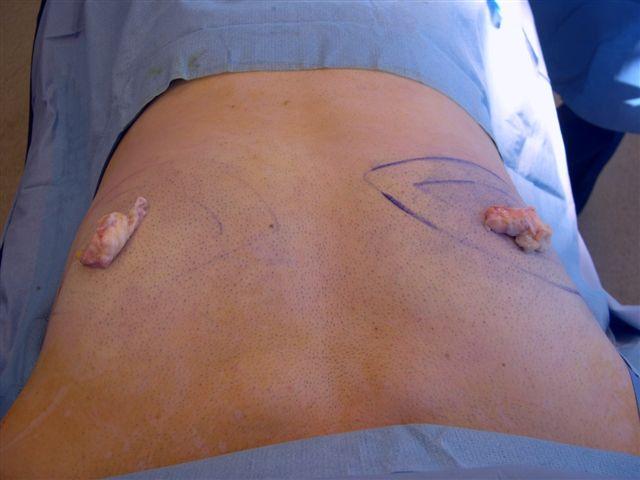

What Is the Gynecomastia Pull-Through Male Breast Reduction Procedure?
Gynecomastia is the growth of glandular tissue in men, resulting in male breast enlargement that can affect body image and confidence at any age. Gynecomastia surgery removes excess breast tissue and fat to restore a masculine chest contour. The pull-through procedure is a specialized form of male breast reduction designed to accomplish this through the smallest possible incision.
Unlike traditional “half-moon” periareolar excision, which requires a larger opening to expose the gland directly, the pull-through approach uses a ~¼-inch cut at the areolar border. Liposuction may be used to remove excess fat, while gland excision is necessary to remove excess glandular tissue that diet and exercise cannot eliminate. It is performed under local or general anesthesia, often as an outpatient procedure in an accredited surgical facility.
Why Is It Called the “Pull-Through” Procedure?
After liposuction frees the gland from surrounding fat and loosens its attachments, the surgeon uses specialized instruments to grasp and extract the firm glandular tissue, pulling it out through the small incision at the lower edge of the areola.
This “blind” or limited-visibility dissection contrasts with open excision, which uses a larger incision to give the surgeon full visual access. The pull-through technique minimizes visible scarring compared with traditional methods, but it requires a high degree of skill and precision to avoid contour deformities. Dr. Delgado favors the periareolar border approach for the best combination of access, scar concealment, and control over the final chest shape.
Who Is a Good Candidate for the Pull-Through Technique?
Not every patient with enlarged breasts is suited to this approach. Candidacy depends on several factors that Dr. Delgado evaluates during consultation:
- Grade 1–2 gynecomastia: mild to moderate enlargement with tight to moderately elastic skin and a clearly defined central gland beneath the areola.
- Persistent cases: many men in their 20s to 40s whose adolescent gynecomastia never resolved despite weight loss, a clean diet, and regular exercise.
- Non-obese men whose chest remains puffy or feminine despite gym training, often called “man boobs,” especially when the main issue is a firm gland rather than only excess fat.
Gynecomastia can occur during puberty and after age 50. Nearly 70% of preteen boys experience gynecomastia, while up to 65% of older men experience it as well. Hormonal imbalances often cause gynecomastia in men, including an estrogen-to-testosterone imbalance that can happen during puberty and again in older age, alongside factors like certain medications, drug use, anabolic steroids, or weight gain. In many cases, the condition resolves on its own during puberty—but when it doesn’t, surgery can significantly boost confidence and improve body image.
General health matters too: good overall health, being a non-smoker (or willing to quit), realistic expectations, and readiness to follow post-surgery instructions all contribute to a safe outcome. The pull-through is typically not appropriate for major skin laxity after significant weight loss, very large or pendulous male breasts requiring skin excision, or complex revision cases.
How the Pull-Through Gynecomastia Surgery Is Performed
On surgery day at Dr. Delgado’s accredited facility, patient safety comes first. Anesthesia options range from local with sedation for smaller cases to general anesthesia for more extensive male breast reduction. Here is the step-by-step flow:
- Marking: The patient is positioned upright, and the chest is marked to plan incision placement at the inferior areolar border and contour the pectorals.
- Tumescent liposuction: Removes excess fat, sculpts the chest borders, and begins freeing the gland from surrounding tissue.
- Small incision: A tiny (~¼ inch) cut is made at the lower edge of the areola.
- Internal dissection: The surgeon detaches the firm breast tissue while preserving a thin, even layer under the nipple to prevent a “crater” deformity.
- The pull-through: The surgeon grasps the gland and gently pulls it out through the incision.
- Fine-tuning: Additional liposuction and internal shaping smooth the transitions into the upper body and lateral chest.
Dr. Delgado evaluates both front and side views on the operating table, adjusting contour for balanced, symmetrical results. A small drain may be placed to prevent fluid buildup and is typically removed in 2 to 3 days. Potential risks include bleeding, infection, and uneven contours, though complications are uncommon with experienced hands. The pull-through technique can reduce discomfort associated with enlarged breast tissue. Most procedures for straightforward grade 1–2 gynecomastia are completed in about 1–2 hours, with patients going home the same day in a compression garment.
Recovery, Results, and Long-Term Outcomes
Immediate Post-Operative Period
Initial recovery time is one to two weeks. Patients often experience less post-operative trauma, enabling quicker recovery times compared to open excision, though recovery experiences may vary depending on the extent of tissue removed. Significant swelling and bruising are expected after surgery. Here is a typical recovery timeline:
| Timeframe | What to Expect |
| Days 1 to 3 | Drain in place (if used), prescription pain management, limited arm motion |
| Day 3 | Drain removal; most patients transition to over-the-counter pain control |
| ~Day 5 | Many patients with desk jobs return to work |
| Days 7 to 10 | Light manual work; avoid heavy lifting |
| Week 2 | Most patients can resume light activities; low-impact cardio, gentle exercise |
| Weeks 4 to 6 | Full workouts including chest training, once cleared |
Compression Garment Use
Patients should wear a compression vest post-surgery continuously for about 4 to 6 weeks to support skin retraction and help sculpt the new contour.
Expected Results
Results include a smaller breast size for a flatter chest, a better-defined pectoral outline, reduced areolar puffiness, and a more confident look in shirts and athletic wear. The tiny periareolar incision fades over several months and blends with the areola’s natural skin border.
Timeline for Final Results
Complete results may take three to six months to appear, with subtler refinements continuing up to 12 months. Removed gland tissue does not grow back under normal circumstances, but significant weight gain, hormonal imbalances, estrogen-related medications, or anabolic steroid use can trigger recurrent fullness. About 20% of patients in long-term studies experienced transient nipple sensitivity changes, with full recovery within 2 to 8 months.
Cost Considerations
Gynecomastia surgery costs vary based on multiple factors. Surgical fees are a primary factor in total surgery costs, while anesthesia fees and facility charges are also major components.
- Surgical technique used
- Anesthesia fees
- Facility charges
- Extent of tissue removal
- Surgeon’s experience and reputation
- Geographic location
Costs vary by surgical technique, with an exact quote provided after an in-person exam.
Dr. Delgado’s Specialized Approach & Why Consult Him
Dr. Miguel Delgado is a board-certified plastic surgeon and internationally recognized leader in gynecomastia surgery based in San Francisco and Marin County. With decades of surgical experience focusing on male breast reduction, including a high volume of adolescent gynecomastia and adult cases, he has refined the pull-through method with specific technical advantages:
- Carefully calibrated gland removal to avoid crater deformities and minimize scarring
- Strategic liposuction patterns that smooth transitions into the lateral chest and upper body
- Thoughtful management of areolar support to maintain a natural nipple position and shape
- Judicious use of drains and compression to minimize complications and speed healing
His commitment to patient safety includes fully accredited operating rooms, board-certified anesthesia providers, and detailed postoperative follow-up, including virtual check-ins for out-of-town patients. During a free consultation, Dr. Delgado reviews your medical history, including hormones, testosterone levels, estrogen-related factors, medications, and weight changes, to determine whether the pull-through, traditional excision, or a combined approach best fits your anatomy and goals. He distinguishes true gynecomastia from pseudogynecomastia and discusses other treatments or lifestyle adjustments before recommending plastic surgery.
Ready to take the next step? Contact Dr. Delgado’s practice to schedule a free virtual or in-office consultation, review before-and-after photos, and receive a personalized surgical plan for a comfortable life with renewed confidence.
Frequently Asked Questions About the Pull-Through Gynecomastia Procedure
Can weight loss or exercise replace the pull-through procedure?
While weight loss and targeted training can reduce chest fat, they cannot remove dense glandular breast tissue, which is the primary problem in most true gynecomastia cases. The pull-through technique is considered when a patient’s chest remains enlarged despite a stable weight, clean diet, and regular workouts. Dr. Delgado always discusses non-surgical options first and only recommends cosmetic surgery when lifestyle measures are unlikely to resolve the issue.
Is the pull-through technique safe for patients with adolescent gynecomastia?
Adolescent gynecomastia often resolves spontaneously within 1 to 2 years, so surgery is usually delayed until the late teens, when growth and hormone levels have stabilized. In emotionally distressing cases that remain unchanged for years, Dr. Delgado may consider a pull-through after a thorough evaluation with the patient and parents. Patient safety, emotional readiness, and long-term stability of results are central factors in the decision.
Will the pull-through procedure leave visible scars?
The incision is typically about ¼ inch long and placed along the lower edge of the areola, where changes in color and texture help camouflage it. With proper healing and sun protection, the scar usually becomes very discreet over 6 to 12 months. Your doctor can recommend topical treatments if needed. This contrasts with larger incisions used in other approaches, offering a clear cosmetic advantage for appropriate candidates.
How does the pull-through method compare to liposuction-only treatment?
Liposuction alone works well for pseudogynecomastia where the issue is primarily excess fat. However, it cannot reliably remove the firm gland located behind the nipple-areola complex. The pull-through procedure combines liposuction for contouring with targeted gland excision in a single operation, reducing the risk of residual breast volume or puffiness.
How soon will I see my final results after pull-through gynecomastia surgery?
Most patients notice a flatter chest as soon as dressings are removed, but swelling and firmness persist for several weeks. Most swelling resolves by 6 to 8 weeks, with subtler refinements continuing for up to 6 to 12 months. Dr. Delgado schedules follow-up visits during this period to monitor contour, appearance, and overall health of the healing tissue.

MIGUEL DELGADO, M.D.


Dr. Delgado, MD is a world-recognized plastic surgeon and specialist in the treatment of male breast enlargement, also called gynecomastia. He has developed new techniques and owns and operates gynecomastia.org, which has become the largest gynecomastia forum in the world. Dr. Delgado holds the two most coveted credentials; the certification by the American Board of Plastic Surgery and membership in the American Society of Plastic Surgery.